Stems, the on-chain music platform founded by Kyler Simzer, will open its first NFT mint on May 22, 2026, releasing the individual audio layers from Simzer’s catalog as collectible NFTs. The drop covers stems from Simzer’s three albums – 000, O, and 111 – and stays open for two weeks before closing on June 5. After that, the initial supply is fixed.
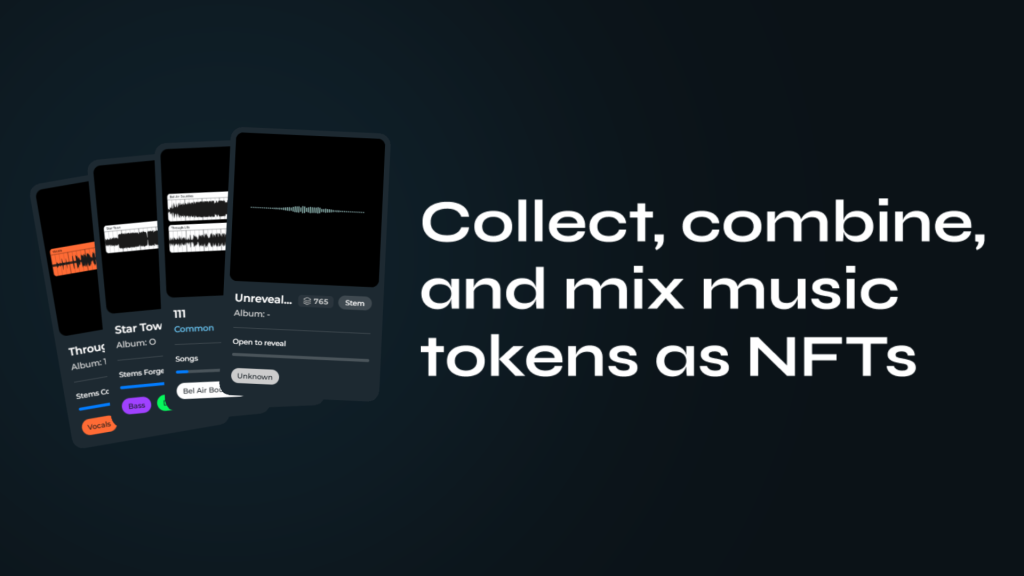
Each NFT represents one audio layer from one of Simzer’s songs: a drum loop, a vocal take, a bassline, a synth, or another track in the production. Collectors who acquire the right combination of stems from a single song can forge them into a Song Token, an NFT that unlocks the complete track along with its ISRC identifier. Collecting and forging every song from an album produces an Album Token, the highest tier of ownership in the system, with the album’s UPC attached.
For Kyler Simzer, founder of Stems and the artist behind the music in the collection, the launch is a personal release as much as a platform debut. The music itself still streams everywhere it normally would. What Stems adds is a way for fans to hold the actual components of the recordings as on-chain assets and combine them up the tiers over time.
“This is the first time my catalog is going on-chain in a structured way,” said Simzer. “Listeners can still stream the songs anywhere. What’s new is that the people who care most about the music have a way to actually hold pieces of it, mix them, forge them, and end up with something that represents the full body of work.”
The platform layers three experiences around the music. The Mint releases the initial supply of stems during the two-week window. The Mixer lets holders preview combinations of stems they own, hearing what their collection sounds like as a mix in progress. The Forge converts assembled stem sets into song and album tokens, with each tier representing a higher form of ownership over the source material. Stems can also be previewed, downloaded, and exported as high-quality audio directly from the platform.
“Music has always been the part of culture fans care most about owning a piece of, but most of the ways to do that have been indirect,” Simzer added. “Stems is the version where ownership is direct. You hold the stem. You forge the song. You finish the album. The progression is yours.”
The three albums in the catalog – 000, O, and 111 – each break down into a defined set of songs, and each song into a defined set of stems. Holders who want a complete Album Token will need to acquire and forge every stem and song in that album, with rarity increasing at each tier of the system.
The two-week mint window is intentional and, once it closes on June 5, no additional stems from this drop will be minted. The market then runs on collector activity rather than continued issuance: trading, mixing, forging, and progressing tokens up the tiers.
Stems is described as the first deployment of a broader model for on-chain music. The mechanics underlying the platform – modular components, tiered ownership, forge-driven progression – are designed in a way that could extend beyond a single catalog if the format finds traction. The first release is built around Simzer’s own music as the founding case.
The mint opens May 22, 2026 and closes June 5, 2026 at stems.fm.
Stems was built by Web3 development agency BeAWhale, the studio responsible for the platform’s product design, smart contract architecture, and core mechanics.
“The team has provided an extremely high-quality service that goes way beyond my expectations.” – Simzer, Founder of Stems.
About Stems
Stems is an on-chain music platform that releases finished songs as collectible NFTs representing individual components of a recording. Through a layered system of stems, songs, and albums, the platform creates a structured ownership progression where collector activity drives scarcity and shapes value over time. The platform’s first release covers Kyler Simzer’s catalog of three albums: 000, O, and 111.
Find out more at https://stems.fm.
The post Kyler Simzer Puts His Music Catalog On-Chain With Stems.fm Mint appeared first on Cryptonews.